Summary
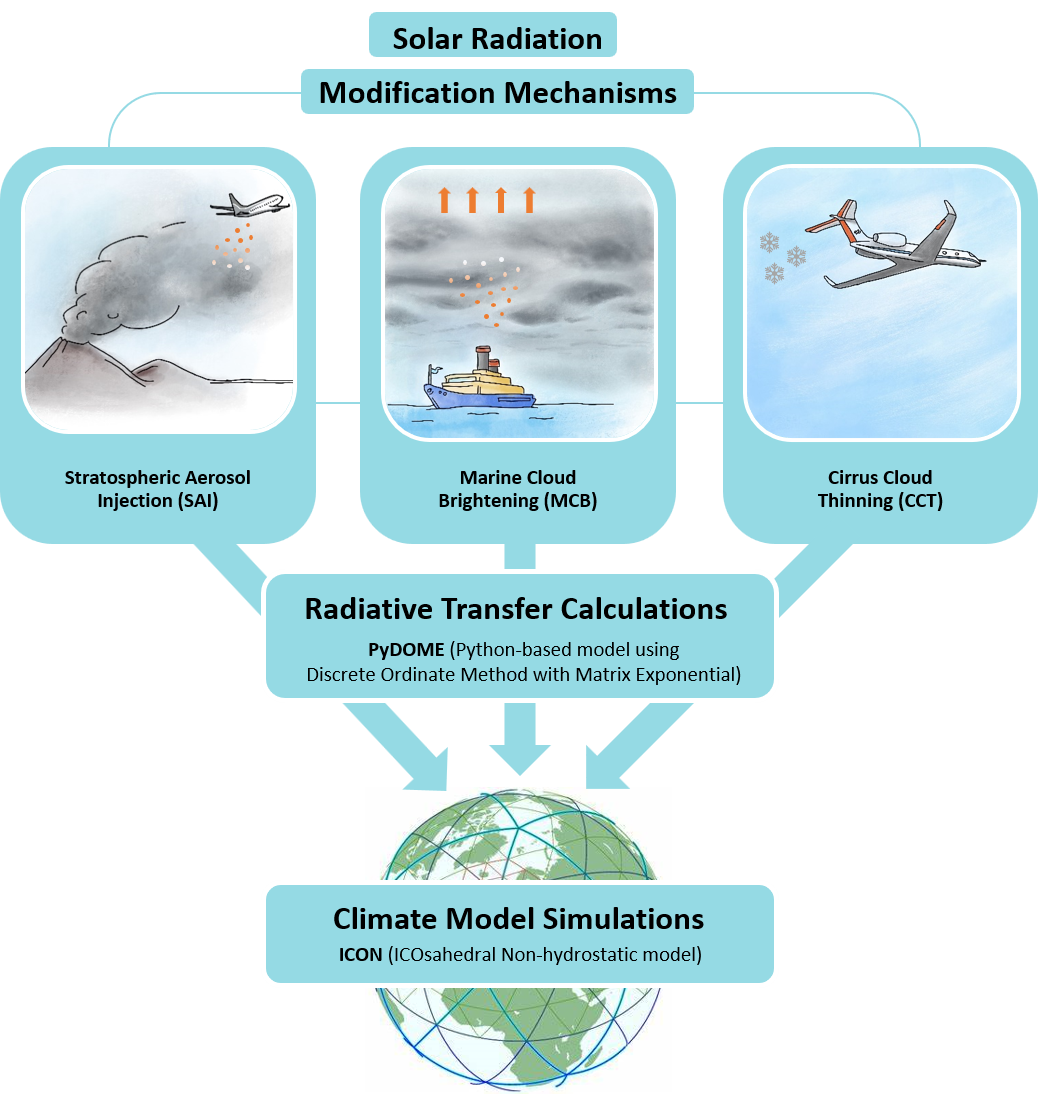
The ACtIon4Cooling project is making use of existing data, algorithms, models and adaptations to propose monitoring capabilities of different Solar Radiation Management (SRM) approaches, including Stratospheric Aerosol Injection (SAI), Marine Cloud Brightening (MCB) and Cirrus Cloud Thinning (CCT). The project is investigating natural analogues, the building of novel datasets and analysing study cases for the assessment of potential SRM deployments. Synergistic measurements of volcanic aerosols, marine clouds affected by ship-track emissions and aviation-relevant cirrus clouds will also be studied.
ACtIon4Cooling is an ESA-funded project of the German Aerospace Center (DLR), National Observatory of Athens (NOA ReACT) and University of Leipzig aiming at indoor research on Solar Radiation Management (SRM).
Background
The project addresses a critical scientific and policy challenge: understanding and quantifying aerosol-cloud interactions (ACI) to reduce uncertainties in climate projections and assess the feasibility, risks, and governance of solar radiation modification (SRM) technologies as a supplementary climate intervention strategy.
ACtIon4Cooling tackles the persistent uncertainties in effective radiative forcing due to aerosol-cloud interactions, particularly those related to aerosol-induced modifications of cloud micro- and macrophysical properties.

Despite decades of research, estimates of total aerosol forcing still vary by over 50%, largely due to limitations in observing and modelling aerosols and their interactions with clouds. Key challenges include insufficient vertical resolution in passive satellite observations, poor characterisation of cloud condensation nuclei (CCN) and ice-nucleating particles (INP), and retrieval dependencies among cloud properties.
Integrated, high-resolution, and vertically-resolved aerosol and cloud measurements, using both passive and active remote sensing, are required to constrain ACI processes. A better understanding of these interactions is essential not only to quantify current climate drivers but also to evaluate the potential of SRM approaches such as stratospheric aerosol injection (SAI), marine cloud brightening (MCB), and cirrus cloud thinning (CCT).
ACtIon4Cooling aims to contribute to the emerging discourse on SRM as a potential emergency or transitional response to rapid climate change, particularly if mitigation efforts fail to meet the Paris Agreement targets. While SRM methods could provide rapid cooling by increasing Earth's albedo, they also pose significant scientific, environmental, and geopolitical risks, including stratospheric ozone depletion, shifts in precipitation patterns, and ethical concerns over governance and deployment. The project seeks to inform responsible SRM research through improved scientific evidence, particularly on the timing, regional effects, and unintended consequences of such interventions.
By advancing the observational and theoretical understanding of ACI, the ACtIon4Cooling supports both climate science and policy. It aims to reduce critical uncertainties in climate modelling, evaluate the physical plausibility and climate impacts of SRM technologies, and provide evidence-based input for governance frameworks on the responsible research and potential deployment of geoengineering solutions.
Project News
- 24-26 March 2026: ACtIon4Cooling results will be presented during the ESA CCI colocation & CMUG integration meeting 2026 in Oxford
- 06 March 2026: Final Review of the ACtIon4Cooling project. Project related documentation including the Final Report can be found here
- 17 June 2025: Joint STATISTICS/ACtIon4Cooling SRM Expert workshop at DLR, see details here
- 02 October 2025: ACtIon4Cooling Midterm Review successfully passed
- 10 March 2025: ACtIon4Cooling was sucessfully kicked-off
ACtIon4Cooling aims to advance our understanding of aerosol-cloud interactions (ACI) and their implications for climate forcing and geoengineering strategies. Its primary scientific objectives include:
- Enhancing Measurement and Retrieval Techniques:
The project seeks to improve the observational capabilities for aerosols and clouds by integrating high-resolution, vertically-resolved remote sensing data from both passive and active instruments. This is intended to overcome current limitations in cloud masking and aerosol retrieval, particularly in terms of capturing critical microphysical properties such as cloud droplet number concentration (Nd), cloud optical thickness (COT), and liquid water path (LWP). - Reducing Uncertainties in Radiative Forcing Estimates:
A key goal is to minimize the large uncertainties—over 50% spread—in estimates of aerosol-induced effective radiative forcing. This will be achieved by refining models of aerosol absorption and the processes governing CCN and ice-nucleating particles, thereby providing a more accurate quantification of aerosol-cloud interactions and their impacts on cloud albedo and lifetime. - Supporting Solar Radiation Modification (SRM) Research:
The project is designed to generate robust scientific evidence to assess the feasibility, timing, and potential efficacy of various SRM approaches, including stratospheric aerosol injection (SAI), marine cloud brightening (MCB), and cirrus cloud thinning (CCT). By elucidating the mechanisms that control aerosol-induced adjustments in cloud properties, the project will help evaluate how these SRM techniques could alter local and global climates, particularly in terms of mitigating rapid warming and extreme weather events. - Informing Policy and Governance:
Beyond its scientific pursuits, the project aims to contribute to the policy discourse on geoengineering by providing detailed assessments of the environmental risks and governance challenges associated with SRM deployments. This includes evaluating potential negative side effects, such as ozone depletion and unintended alterations of regional climate regimes, to support the development of comprehensive, evidence-based guidelines for responsible SRM research and implementation.
The first phase focuses on data acquisition and preparation. This involves collecting satellite (e.g., CALIPSO, EarthCARE, Aeolus, TROPOMI) and ground-based (e.g., ACTRIS, BSRN, AERONET) observations to characterise natural analogues such as volcanic eruptions (e.g., Pinatubo, Calbuco) and ship-track aerosols. These datasets provide essential inputs to constrain microphysical and optical properties of aerosols and clouds relevant to SRM analogues.
The second phase consists of data exploitation and analysis, where advanced radiative transfer modelling (using tools like DOME and pyDOME) will simulate radiation fields at the top and bottom of the atmosphere. These simulations will incorporate realistic aerosol and cloud properties, validated against satellite and ground-based measurements. Special attention will be given to the vertical profiling of aerosols and clouds, particularly in the stratosphere and marine boundary layer.
The third phase focuses on development and validation of SRM observational proxies. This includes investigating satellite-derived metrics (e.g., aerosol layer height, UV absorbing aerosol index) and their sensitivity to SRM-relevant perturbations. The impact of aviation-induced cirrus modification will also be analysed using lidar-based polarization data (PLDR) and linked to cirrus cloud formation processes.
The fourth phase is dedicated to sensitivity studies and scenario simulations. The radiative impact of SRM scenarios will be tested under a range of atmospheric conditions using advanced sensitivity analyses and phase function corrections. These outcomes feed into global and regional climate simulations using the ICON atmospheric model, aligned with GeoMIP/CMIP6 protocols, to evaluate broader climatic consequences such as temperature anomalies, teleconnection shifts, and extreme weather impacts.
A final integrative activity will synthesise all results, facilitating the development of monitoring and attribution requirements for a dedicated SRM satellite mission. Cross-cutting actions include validation campaigns (e.g., PANGEA/ASKOS) and the assessment of uncertainties associated with SRM interventions.
Overall, ACtIon4Cooling combines high-resolution observations, radiative transfer theory, and climate modelling to build a robust scientific basis for assessing the feasibility, effectiveness, and risks of SRM strategies.
- A. Argyrouli, P. Hedelt. Final Report (FR). 2026, ACtIon4Cooling FinalReport (FR).
- ACtIon4Cooling / STATISTICS. SRM Workshop Conclusions. 2025, Conclusions_STATISTICS _ ACtIon4Cooling_SRMWorkshop.
- A. Argyrouli, P. Hedelt. Executive Summary (ES). 2026, ACtIon4Cooling_ExecutiveSummary_v0.9.
Project lead
DLR Remote Sensing Institute, Atmospheric Processors Department (DLR MF-ATP)
- WP10X lead (Project management and Outreach)
- WP 200 Lead (Scientific Requirements, Impact Analysis Assessment)
- WP401 Lead (Marine Cloud Brightening)
- WP402 Lead (Observation Synergies &Radiation Closure)
Project partners
DLR Physics of the Atmosphere Institute, Lidar Department (DLR PA-LID)
- WP403 Lead (Cirrus Cloud Thinning)

National Observatory Athens, Remote Sensing of Aerosols, Clouds and Trace Gases (NOA ReACT)
- WP300 Lead (Coordination with EU projects)
- WP400 Lead (Aerosol/Cloud Properties)
- WP402 lead (Stratospheric Aerosol Injection)

Universität Leipzig - Faculty of Physics and Earth System Sciences
- WP500 Lead (Scientific Synthesis)

Science Leader: Dr. Athina Argyrouli (DLR)
Project Leader: Dr. Pascal Hedelt (DLR)
ESA Technical Officer: Dr. Michael Eisinger
LinkedIn page: https://www.linkedin.com/groups/10061777/
Overview
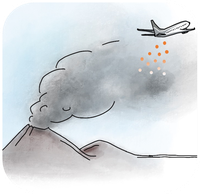
Stratospheric Aerosol Injection is a technique which aims at increasing the backscattering of solar radiation directly back into the space to cool Earth's climate by injecting Aerosols in the Earth’s stratosphere.
It is widely considered the most effective SRM approach for rapidly reducing global mean temperature in a high-greenhouse-gas environment (see SAPEA Evidence Review Report ). Its conceptual foundation is largely derived from observations of major volcanic eruptions, which demonstrated measurable global surface cooling following the injection of large quantities of reflective particles into the stratosphere. Events such as the 1991 Mt. Pinatubo eruption provided empirical evidence that stratospheric aerosols can substantially perturb the Earth’s radiation budget.
The primary climatic mechanism of SAI involves increasing planetary albedo: injected aerosol particles scatter incoming shortwave solar radiation back to space, thereby inducing surface cooling. Simultaneously, these particles absorb terrestrial longwave radiation, leading to warming of the lower stratosphere. The magnitude and balance of these effects depend strongly on aerosol composition, size distribution, optical properties, injection altitude, and spatial distribution. In addition, the nature of injected stratospheric aerosols drives their interactions with chemical processes, including those affecting ozone concentrations, and thus is crucial.
Stratospheric Aerosol Injection - the benefits and options
There is a body of evidence that suggests SAI has potential as an effective technique in reversing the Earth’s warming rapidly. Satellite observations after major volcanic eruptions have shown a global cooling impact following the release of large concentrations of reflective particles into the lower stratosphere. Due to their chemical composition, the net radiative effect of volcanic aerosols is negative because they more effectively scatter shortwave solar radiation in comparison to absorbing longwave terrestrial radiation.
The addition of sulphate particles into the stratosphere after a volcanic eruption provides a natural analogue for Solar Radiation Modification (SRM) deployment: The Mount Pinatubo eruption, in 1991, injected approximately 20 million tons of SO2 into the stratosphere - as measured by the Total Ozone Mapping Spectrometer (TOMS) -and the SO2 cloud remained in the atmosphere for weeks (Bluth et al., 1992). The global annual-mean cooling in the following two years was quantified at 0.3-0.5°C and coincided with a reduction of the global water vapour concentrations. This demonstrated that the water vapour feedback in the climate models is crucial for making climate change projections (Soden et al., 2002).
For the deployment of a SAI approach, a scaling up of a global mean temperature reduction of about 1-2°C would require the annual continuous injection rates of several million tons of sulphur dioxide equivalent to the injection of SO2 concentrations after Mount Pinatubo volcanic eruption.
Currently, the technology to achieve injection aerosol precursors at a predefined altitude of the stratosphere is lacking. There are however a few climate geoengineering proposals (Vaughan and Lenton, 2011) and review studies on capabilities and costs on such an SRM deployment (Smith and Wagner, 2018).
Although the injection of volcanic aerosols is widely used as the natural analogue of SAI, it may not be the optimum solution due to its adverse effects, such as stratospheric ozone depletion. For this reason, the ACtIon4Cooling project will investigate simulated cases of SAI, with varying microphysical and optical properties. The size distributions will be similar to volcanic aerosols, but the project will take into account larger and smaller particles, to investigate the effects of quicker or slower deposition of the particles, respectively. The refractive index will be that of calcite particles, which have been reported to not have an effect on ozone depletion (e.g. Tilmes et al., 2022) and will have a non-spherical (spheroidal) shape.
Furthermore, although volcanic eruptions are imperfect analogues due to their episodic nature, limited spatial control, and fixed aerosol chemistry, they however provide valuable real-world constraints on aerosol microphysical and optical properties, transport pathways, residence times, radiative and climate impacts. Variations in eruption latitude and season further inform understanding of dynamical influences on aerosol dispersion and climate response.
Key knowledge gaps addressed by ACtIon4Cooling
ACtIon4Cooling project addressed key knowledge gaps related to SAI, including:
- Characterization of the microphysical and radiative evolution of volcanic aerosols as natural analogues.
- Evaluation of potential impacts on precipitation patterns and atmospheric circulation.
- Analysis of possible regional imbalances, such as tropical overcooling or insufficient high-latitude cooling.
Summary & Results
Volcanic aerosol detection and information on their vertical distribution, injection heights and the resulting perturbation in stratospheric optical depth was obtained from the high spatial resolution space-borne lidar ATLID on board EarthCARE. More specifically, to identify the aerosol layers of volcanic origin, the ATLID L2 optical property profiles and target classification product have been utilized. The case study of Ruang volcano eruption (April 2024) was selected to demonstrate the analysis results.
ATLID observations show that four months after the eruption, peak stratospheric AOD within ±25° latitude reached ~0.06 at 355 nm, with low linear depolarization (<0.10), indicating predominantly spherical aerosols presence. From August 2024 to September 2025, AOD gradually declined (~0.04) while depolarization remained stable, indicating slow particle removal from the stratosphere; the aerosol layer ascended from ~19–25 km until April 2025, though layer-top estimates remain uncertain due to ATLID resolution changes near 20 km.
Synergies between ATLID measurements and observations provided from the Hyper-Angular Rainbow Polarimeter (HARP2) on board PACE mission were also used. The methodology applied exploits aerosol-induced modifications on the polarized light signal measured at the top of the atmosphere (TOA), emerging from liquid clouds that are found below the stratospheric aerosol layers. This method was first presented by Waquet et al. (2009; 2013) to derive tropospheric particle size (reff) and AOD above pixels containing liquid clouds.
In addition to the satellite observations, optical modelling simulations have been performed to support the characterization of stratospheric aerosol particles using the Modeled optical properties of ensembles of aerosol particles (MOPSMAP) scattering database (Gasteiger and Wiegner, 2018). The satellite-observed stratospheric AOD perturbations for the case of the Ruang volcanic eruption, were implemented in an ICON climate model simulation to evaluate the global impacts of SAI. The observed monthly area-averaged AOD perturbations over the tropical region between ±25° in latitude, together with the corresponding aerosol layer top and bottom heights, from August 2024 to September 2025, were used as inputs to the ICON model.
RTM simulation results generated with the pyDOME model indicate that the radiative impact of SAI is not uniform but strongly modulated by the underlying surface albedo. Over dark surfaces (e.g., ocean) increasing AOD effectively masks a low-albedo surface. The enhanced aerosol scattering increases upward radiation at TOA. Over bright surfaces aerosol layers intercept radiation that would otherwise be reflected upward by the surface. Part of this radiation is absorbed or redirected downward, reducing TOA outgoing irradiance. That implies that there exists a ground albedo, such that aerosol-induced scattering and surface-reflection feedback compensate each other. This transition marks a regime shift in the aerosol radiative effect.
The ICON simulation shows a consistent climate forcing in clear skies, blurred by cloud adjustments. A very strong precipitation shift is simulated. A detailed analysis of the exact mechanisms has yet to be done, but it is evident that such very large consequences for precipitation patterns and intensity are a serious risk to be taken into account for SAI application, and even for any large-scale field experiments.
References
Bluth, G. J. S., Doiron, S. D., Schnetzler, C. C., Krueger, A. J. and Walter, L. S. Global tracking of the SO 2 clouds from the June1991 Mount Pinatubo eruptions. Geophysical Research Letters. 19: 151–154, https://doi.org/10.1029/91GL02792,1992.
Gasteiger, Josef, & Wiegner, M. (2018). MOPSMAP v1.0: a versatile tool for the modeling of aerosol optical properties. Geoscientific Model Development, 11(7), 2739–2762. https://doi.org/10.5194/gmd-11-2739-2018
Soden BJ, Wetherald RT, Stenchikov GL, Robock A. Global cooling after the eruption of Mount Pinatubo: a test of climate feedback by water vapor. Science. Apr 26;296(5568):727-30, https://doi.org/10.1126/science.296.5568.727, PMID: 11976452, 2002.
Vaughan, N.E., Lenton, T.M. A review of climate geoengineering proposals. Climatic Change 109, 745–790. https://doi.org/10.1007/s10584-011-0027-7, 2011.
Tilmes, S., Visioni, D., Jones, A., Haywood, J., Séférian, R., Nabat, P., Boucher, O., Bednarz, E. M., and Niemeier, U.: Stratospheric ozone response to sulfate aerosol and solar dimming climate interventions based on the G6 Geoengineering Model Intercomparison Project (GeoMIP) simulations, Atmos. Chem. Phys., 22, 4557–4579, https://doi.org/10.5194/acp-22-4557-2022, 2022 a.
Waquet, F., Riedi, J. C., Labonnote, L., Goloub, P., Cairns, B., Deuzé, J.-L., & Tanré, D. (2009). Aerosol remote sensing over clouds using A-Train observations. Journal of the Atmospheric Sciences, 66(8), 2468–2480. https://doi.org/10.1175/2009JAS3026.1
Waquet, F., Cornet, C., Deuzé, J.-L., Dubovik, O., Ducos, F., Goloub, P., Herman, M., Lapyonok, T., Labonnote, L. C., Riedi, J., Tanré, D., Thieuleux, F., and Vanbauce, C.: Retrieval of aerosol microphysical and optical properties above liquid clouds from POLDER/PARASOL polarization measurements, Atmos. Meas. Tech., 6, 991–1016, https://doi.org/10.5194/amt-6-991-2013, 2013.
Overview
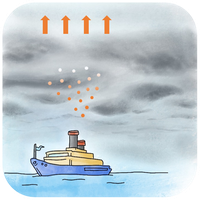
This potential climate intervention technique modifies the albedo of the low clouds over water by introducing cloud condensing nuclei-effective aerosols to produce a larger amount of smaller in size cloud droplets that reflect more sunlight back into space. Latham et al. (2008) estimated that a 6% increase of the albedo of marine stratocumulus clouds can offset the warming caused by the CO2 doubling.
A natural analogue for this solar radiation modification deployment comes from ship exhaust aerosol particles directly entering marine stratocumulus clouds (Christensen and Stephens, 2011) altering cloud microphysical and macrophysical properties. Cloud albedo responses to ship tracks depends on several parameters such as the mesoscale cloud structure, the free tropospheric humidity, and cloud top height (Chen et al., 2012).
Marine Cloud Brightening - the benefits and options
The ACtIon4Cooling project will evaluate the effectiveness in producing measurable cooling of the Earth system - at global and regional scale - resulting from MCB deployment.
The project will analyse marine clouds that are co-located with ship-track signatures over the Mediterranean Sea (and elsewhere): Changes in cloud cover and reflectivity of those marine clouds with ship emission signature will be evaluated.
Marine cloud properties will come initially from the spaceborne Ultraviolet Visible Near-infrared (UVN) spectrometers, such as TROPOMI on Sentinel-5 Precursors (Veefkind et al., 2012). The TROPOMI operational algorithms for the retrieval of cloud parameters (Loyola et al., 2018) make use of Earth-shine reflectance measurements in the spectral windows of UV, VIS and NIR. Complementary information for the marine clouds captured by TROPOMI instrument will be exploited from VIIRS on Suomi-NPP. The MCB aerosol information is captured by the TROPOMI sensor in the Oxygen absorption bands (i.e., Aerosol Layer Height), and in the UV spectral window as well. In particular, the ultraviolet (UV) Absorbing Aerosol Index (AAI) is widely used as an indicator for the presence of absorbing aerosols in the atmosphere (Kooreman et al., 2020; Torres et al., 1998a). The ship-track signature of aerosols in the TROPOMI cloud retrievals will be investigated via the scientific NASA TropOMAER (TROPOMI aerosol algorithm), which simultaneously retrieves aerosol optical depth (AOD), single-scattering albedo (SSA), and the qualitative UV aerosol index (UVAI) (Torres et al., 2020).
Key knowledge gaps addressed by ACtIon4Cooling
ACtIon4Cooling addressed key knowledge gaps related to MCB through observational analysis of natural and anthropogenic analogues such as ship tracks. The project focused on:
- Identifying regions where marine low clouds exhibit high susceptibility to aerosol perturbations.
- Quantifying associated radiative and precipitation responses at regional and global scales.
- Monitoring changes in cloud microphysics and top-of-atmosphere radiative properties using Earth Observation data.
- Providing empirical constraints to improve aerosol–cloud interaction parameterizations in climate models.
- Developing methodologies to distinguish MCB-like signals from natural variability and broader anthropogenic aerosol effects.
Summary & Results
For MCB the vessel density maps from the European Marine Observation and Data Network (EMODnet) were used for defining where the ships are located. The primary information on cloud properties was acquired from Sentinel-5 Precursor/TROPOMI. Complementary information for the clouds captured by TROPOMI instrument was taken from VIIRS on Suomi-NPP. The TROPOMI NO₂ Tropospheric Vertical Column Densities (VCDs) were analyzed to quantify shipping-related nitrogen dioxide enhancements along major maritime corridors in the Mediterranean Sea and North Eastern Atlantic.
The shipping emissions can be systematically detected in the NO2 Tropospheric column. The sign of the perturbation is always positive; the magnitude of the NO2 perturbation is large (~30% for the Mediterranean region). On the contrary, the perturbations of the cloud parameters may change sign from day to day. The natural variability of the clouds masks the signal of the modification due to the ship-emitted particles at their cloud base.
Therefore, the automatic ship-track detection in all conditions could be challenging with the use of Machine Learning (ML) techniques. The primary goal is to develop a ship-track detection model accurate enough to enable the estimation of local pixel-by-pixel cloud perturbations, computed as the difference between ship-affected pixels and background reference pixels within the same scene and meteorological regime. The latter is only possible with densely populated ship-relevant datasets which could be used for the training of a ML classifier. Until that trustworthy ship-track detection model is built, the most robust way to quantify cloud perturbations due to ships is the regional mean perturbation formula (i.e., the difference of the mean of ship-affected pixels per day and grid box minus the mean of background pixels per day and grid box).
The regional daily perturbation dataset (ship-mean versus background-mean approach) is more directly aligned with policy-relevant detectability questions. By aggregating signals at regional and daily scales, it reflects how monitoring systems for SRM would likely be operationalized in practice. This approach enables statistical robustness and provides a bridge between process-level understanding and operational climate intervention monitoring strategies.
The satellite-observed ship-affected marine cloud perturbations were reproduced in the ICON simulation to evaluate the global impacts of MCB. Pairs of global simulations were performed for attribution of effects, with and without the observations-based cloud perturbation. In the perturbed simulation, the liquid water path was increased by 1%, as suggested by observations over the region of interest. For the observations-derived perturbation of a mere 1%, no clear perturbation to the top-of-atmosphere radiation budget or surface air temperature is detected within the region of interest suggesting that the imposed perturbation is masked by signals arising from cloud adjustments. In turn, for a strong perturbation of a factor of 10, a regional effective radiative forcing of 15 Wm-2 was obtained, with little perturbation to the top-of-atmosphere radiation budget outside the region of interest.
In consequence, there is no discernible perturbation of temperatures in the observations-tied perturbation. For the strong perturbation, in turn, surface air temperature increased locally by up to 0.5K, suggesting the relevance of Earth system feedbacks for the analysis of MCB climate effects. Precipitation responses extend beyond the region of imposed perturbation, reflecting the strong coupling between latent heating, large-scale circulation, and atmospheric energy balance. A similar spatial pattern of precipitation response is obtained for the strong and the weak perturbation simulations. This suggests that the precipitation changes are instead dominated by internal variability and rapid adjustment processes.
References
Veefkind, J.P., I. Aben, K. McMullan, H. Förster, J. de Vries, G. Otter, J. Claas, H.J. Eskes, J.F. de Haan, Q. Kleipool, M. van Weele, O. Hasekamp, R. Hoogeveen, J. Landgraf, R. Snel, P. Tol, P. Ingmann, R. Voors, B. Kruizinga, R. Vink, H. Visser, P.F. Levelt, TROPOMI on the ESA Sentinel-5 Precursor: A GMES mission for global observations of the atmospheric composition for climate, air quality and ozone layer applications, Remote Sensing of Environment, Volume 120, Pages 70-83, https://doi.org/10.1016/j.rse.2011.09.027, 2012.
Loyola, D. G., Gimeno García, S., Lutz, R., Argyrouli, A., Romahn, F., Spurr, R. J. D., Pedergnana, M., Doicu, A., Molina García, V., and Schüssler, O.: The operational cloud retrieval algorithms from TROPOMI on board Sentinel-5 Precursor, Atmos. Meas. Tech., 11, 409–427,https://doi.org/10.5194/amt-11-409-2018, 2018.
Kooreman, M. L., Stammes, P., Trees, V., Sneep, M., Tilstra, L. G., de Graaf, M., Stein Zweers, D. C., Wang, P., Tuinder, O. N. E., and Veefkind, J. P.: Effects of clouds on the UV Absorbing Aerosol Index from TROPOMI, Atmos. Meas. Tech., 13, 6407–6426, https://doi.org/10.5194/amt-13-6407-2020, 2020.
Torres, O., Bhartia, P. K., Herman, J. R., Ahmad, Z., and Gleason, J.: Derivation of aerosol properties from satellite measurements of backscattered ultraviolet radiation: Theoretical basis, J. Geophys. Res., 103, 17099–17110, https://doi.org/10.1029/98JD00900, 1998. Torres, O., Jethva, H., Ahn, C., Jaross, G., and Loyola, D. G.: TROPOMI aerosol products: evaluation and observations of synoptic-scale carbonaceous aerosol plumes during 2018–2020, Atmos. Meas. Tech., 13, 6789–6806, https://doi.org/10.5194/amt-13-6789-2020, 2020.
Illingworth, Anthony J., H. W. Barker, A. Beljaars, Marie Ceccaldi, H. Chepfer, Nicolas Clerbaux, J. Cole et al. "The EarthCARE satellite: The next step forward in global measurements of clouds, aerosols, precipitation, and radiation." Bulletin of the American Meteorological Society 96, no. 8 (2015): 1311-1332, https://doi.org/10.1175/BAMS-D-12-00227.1, 2015.
Latham, J., Rasch, P., Chen, C.-C., Kettles, L., Gadian, A., Gettelman, A., Morrison, H., Bower, K., and Choularton, T.: Global temperature stabilization via controlled albedo enhancement of low-level maritime clouds, Philos. Trans. Roy. Soc. London, 366, 3969–3987, https://royalsocietypublishing.org/doi/10.1098/rsta.2008.0137, 2008.
Overview
Cirrus Cloud Thinning is a technique which aims at reducing the amount of cirrus clouds in the sky. Cirrus clouds affect the escape of infrared radiation back out to space and so contribute to the net heating of Earth's atmosphere. CCT techniques involve the seeding of cirrus clouds with ice-nucleating particles to increase the sedimentation rate of the ice crystals.

Cirrus Cloud Thinning - the benefits and options
Aviation exhaust emissions release greenhouse gases, particles and water vapour into the atmosphere. At high altitudes this can create linear clouds called contrails and cirrus clouds. These clouds add to cloud cover and indirectly modify properties of existing cirrus.
There may be no perfect natural analogues for CCT, but aviation-relevant cirrus cloud and the involved processes can help to understand how CCT might work in the real atmosphere. Within ACtIon4Cooling, we will use the existing airborne observations to focus on specific clouds where aviation emissions are dense and further derive their optical thicknesses and ice crystal number concentrations. From a statistical perspective, the project will also use satellite data to determine the optical and microphysical properties of cirrus clouds as a function of latitude and longitude as input for Earth system model studies.
The CCT technique is not well studied to date. Gasparini and Lohmann (2016) performed climate model simulations and concluded that cirrus cloud seeding cannot result in a significant cooling due to the large uncertainties of the complex microphysical mechanisms of those clouds. Penner et al., 2015 found that the cirrus cloud seeding cannot be considered as a viable climate intervention technique but they associate their conclusion to the uncertainties in the modelling and observations of cirrus clouds and particularly, the balance between homogeneous and heterogeneous ice nucleation.
Cirrus Cloud Thinning (CCT) Analogues
There are several best-known natural analogues of CCT: Volcanic eruptions inject sulfur dioxide and water vapor into the atmosphere, forming sulfate aerosols and affecting cirrus formation indirectly. During a mineral dust episode (like Saharan dust), a significant amount of mineral dust is lifted into troposphere, which may act as INPs. The consequent transport of dust particles, depending on meteorological factors, from their source regions across large distance will spread the influence into larger scales. Aircraft-emitted particles may also act as INPs, causing heterogeneous nucleation in regions with a favorable atmospheric state. It leads to the formation of contrails and exerts indirect effects on the existing cirrus clouds. In the frame of the current project, we will focus on the changes of cirrus cloud properties responding to aviation impact as a natural analogue of CCT.
Previous studies indicated that the enhanced heterogeneous nucleation caused by aviation exhaust particles can be responsible for the high values of PLDR of cirrus clouds (Urbanek et al., 2018; Li and Groß, 2021, 2022). Furthermore, cirrus clouds with enhanced PLDR exhibit larger effective ice particles and lower number concentrations (Groß et al., 2023). The findings provide strong support that changes in microphysical properties of cirrus clouds depending on aviation emissions can serve as a natural analogue of CCT.
Key scientific gaps addressed in ACtIon4Cooling
Within this context, ACtIon4Cooling addresses key scientific gaps related to CCT:
- Identification and characterization of aviation-induced cirrus modifications as natural analogues for CCT.
- Analysis of cirrus microphysical and optical properties in high-aviation versus pristine regions using airborne measurements and backward trajectory analysis.
- Regional comparison of cirrus optical depth, depolarization ratio, and microphysical parameters across midlatitudes and high latitudes, accounting for meteorological influences using ERA5 reanalysis data.
- Assessment of long-term trends in cirrus properties in regions with increasing aviation activity using CALIPSO observations.
- Evaluation of potential impacts on precipitation patterns and regional atmospheric circulation.
- Quantification of radiative forcing from CCT-like perturbations using radiative transfer modeling and provision of observational constraints for ICON climate model simulations.
Summary & Results
Available airborne measurements during the ML-CIRRUS aircraft campaign were used to trace specific clouds forming in the regions with either dense aviation emissions, which exhibit enhanced PLDR. Furthermore the cloud optical thickness, ice crystal effective diameters and number concentrations were calculated with coordinated in situ instruments and lidar, revealing that high-PLDR-mode cirrus clouds are characterized by larger particles with smaller number concentrations (Groß et al., 2023). From a statistical perspective, the available CAPLISO satellite data have also been exploited to determine the optical and microphysical properties of cirrus clouds temporally (e.g. during the pre-COVID years period and year-to-year variation) and spatially (comparison between midlatitudes and high latitudes) for studying aviation impacts on cirrus cloud properties (Li and Groß, 2021, 2022, 2025).
The derived microphysical and optical parameters of cirrus clouds as a function of latitude and longitude have been provided for model simulation of ICON and RTM. The RTM results clearly demonstrate that reducing COT decreases the cloud reflectance, leading to lower TOA upward irradiance. This corresponds to a positive shortwave radiative forcing (warming), since less solar radiation is reflected back to space. Thus, in the shortwave domain, cirrus cloud thinning produces a warming tendency. In the longwave domain, the radiative effect of cirrus clouds is different. Cirrus clouds act as semi-transparent emitters and absorbers of terrestrial radiation. A reduction in COT decreases the cloud emissivity, allowing more outgoing longwave radiation to escape to space. This leads to a negative longwave radiative forcing (cooling).
In ICON simulations, no clear perturbation to the top-of-atmosphere radiation budget is detected within the region of interest, suggesting that the imposed perturbation is masked by signals arising from cloud adjustments. Changes in the top-of-atmosphere radiation budget induced by cloud adjustments are particularly pronounced in the tropics. A small increase in surface air temperature of approximately 0.2 K is detected within the region of interest, even if the expected signal was a cooling.
Globally, a mean decrease of 0.01 K in surface air temperature is simulated. The magnitude of the change in surface air temperature over land exceeds that over the oceans. Precipitation responses extend beyond the region of imposed perturbation, reflecting the strong coupling between latent heating, large-scale circulation, and atmospheric energy balance. These model-based results point to the large challenge detecting and attributing desired climate effects of CCT – and similarly, of SAI and MCB as well – to occur in field trials or short-term deployment.
References
Gasparini, B. and Lohmann, U. Why cirrus cloud seeding cannot substantially cool the planet. Journal of Geophysical Research: Atmospheres. 121: 4877–4893, https://doi.org/10.1002/2015JD024666 2016.
Groß, S., Jurkat-Witschas, T., Li, Q., Wirth, M., Urbanek, B., Krämer, M., Weigel, R., and Voigt, C.: Investigating an indirect aviation effect on mid-latitude cirrus clouds – linking lidar-derived optical properties to in situ measurements, Atmos. Chem. Phys., 23, 8369–8381, https://doi.org/10.5194/acp-23-8369-2023, 2023.
Li, Q., and Groß, S.: Changes in cirrus cloud properties and occurrence over Europe during the COVID-19-caused air traffic reduction, Atmos. Chem. Phys., 21, 14573-14590, https://doi.org/10.5194/acp-21-14573-2021, 2021.
Li, Q. and Groß, S.: Satellite observations of seasonality and long-term trends in cirrus cloud properties over Europe: investigation of possible aviation impacts, Atmos. Chem. Phys., 22, 15963–15980, https://doi.org/10.5194/acp-22-15963-2022, 2022.
Li, Q. and Groß, S.: Lidar observations of cirrus cloud properties with CALIPSO from midlatitudes towards high-latitudes, Atmos. Chem. Phys., 25, 16657–16677, https://doi.org/10.5194/acp-25-16657-2025, 2025.
Penner, J. E., Zhou, C. and Liu, X. Can cirrus cloud seeding be used for geoengineering? Geophysical Research Letters. 42: 8775–8782, https://doi.org/10.1002/2015GL065992, 2015.
Urbanek, B., Groß, S., Wirth, M., Rolf, C., Krämer, M., and Voigt, C.: High depolarization ratios of naturally occurring cirrus clouds near air traffic regions over Europe, Geophys. Res. Lett., 45, 13,166–13,172, https://doi.org/10.1029/2018GL079345, 2018.
ACtIon4Cooling and the STATISTICS project have organized a workshop on Solar Radiation Modification (SRM) on 𝟭𝟳 𝗝𝘂𝗻𝗲 𝟮𝟬𝟮𝟱 𝗮𝘁 𝗗𝗟𝗥 𝗢𝗯𝗲𝗿𝗽𝗳𝗮𝗳𝗳𝗲𝗻𝗵𝗼𝗳𝗲𝗻 (Germany).
The objectives of the workshop were to:
- Present the work carried out within the ACtIon4Cooling and STATISTICS projects to the SRM community,
- Foster collaboration between the satellite and modelling communities, as well as across a wide range of relevant disciplines,
- Discuss and coordinate ongoing and future efforts in SRM research at the European level,
- Explore, in the broader scope of SRM, how new findings could eventually inform discussions on governance and risk.
Conclusions from the STATISTICS / ACtIon4Cooling workshop on SRM techniques - 17th June 2025
Support for Open-Ended Research
The workshop participants expressed clear support for open-ended research on Solar Radiation Modification (SRM) techniques, particularly through publicly funded mechanisms. Given the deep uncertainties and the high stakes involved with climate mitigation and adaptation, a robust scientific understanding of potential processes, impacts, risks and unintended consequences of SRM must be constrained by neither narrow policy frames nor prematurely operational agendas. Public funding can ensure independence, transparency, and broad stakeholder engagement in setting research priorities. European funding for research explicitly labelled as SRM would build a basis for an independent stance on the topic.
Enhanced Use of Natural Analogues and Existing Observations
Great scientific potential exists in studying natural (and anthropogenic) analogues of SRM, such as explosive volcanic eruptions, low-level degassing volcanoes, changes or variability in traffic (ship) and industry emissions, dust events in the upper troposphere, or contrail cirrus. These opportunities remain underexploited. In particular, satellite datasets—some of which contain relevant but as-yet-unanalysed observations—offer a valuable resource for improving our understanding of aerosol–cloud–radiation interactions. A coordinated effort to mine and integrate such datasets is recommended. In particular, harmonizing assumptions made in models and satellite retrievals would help to better integrate observations and models (e.g. through digital twins). New observing capabilities should also be mobilized.
Field experiments: Clarity of Rationale and Participatory Design Are Crucial
While small-scale field experiments may eventually become necessary to resolve key scientific uncertainties that cannot be addressed by model experiments, natural analogues or laboratory studies alone, their justification and design must be articulated with great clarity. This includes defining specific scientific and/or technical objectives, ensuring transparent public communication, and co-developing experimental plans with a diverse range of stakeholders to maximise legitimacy, scientific and/or technical value, and ethical integrity. An assessment on potential impacts on weather and climate should be provided as part of the planning. It should be noted that field experiments relevant to SRM techniques may also be motivated by process understanding, regardless of SRM objectives.
Improved Observing System with Distinction Between Monitoring and Detection
The current global observing system is insufficient for monitoring key parameters relevant to SRM techniques, especially for Stratospheric Aerosol Injection (SAI), and for detecting SRM experiments below a certain size or uncoordinated deployment. There remain major observational gaps in trace gases, aerosol and cloud properties, vertical distribution, radiative effects, and troposphere-stratosphere coupling. Further risks are associated with the downscaling, or lack of open access availability to European research, of US current and future observing programmes and satellite missions. A dedicated effort is required to document monitoring priorities in order to enhance these capabilities. The ongoing effort to produce long-term homogenised climate data records relevant to SRM processes should be continued. Observing systems designed to study natural analogues and assess the impacts of planned field experiments may not necessarily be the same as those needed for early detection and attribution of uncoordinated SRM field experiments or deployment.
Improved Modelling Capabilities for Prediction and Attribution
Earth System Models are improving through resolution increase and more comprehensive representation of aerosol and cloud processes, but different models continue to disagree on some key aspects of the climate response to SRM. Moreover, the predictions at subseasonal, seasonal and decadal scales are insufficient to reliably anticipate the impacts of field experiments and potential deployment. Similarly, it is necessary to establish confidence in counterfactual simulations that would be required to quantify intended and unintended impacts of SRM field experiments or deployment. Research is thus required on how trust in counterfactual simulations may be established. Further model improvements may build on insights from natural analogues and hypothetical future field experiments.